

A patient arrives at the emergency room with a severe allergic reaction. The clinicians rush to access her medical records, only to discover her allergy information is trapped in another hospital’s electronic health record (EHR) system, formatted differently and inaccessible in real time. The result? Delayed care, unnecessary tests, and increased risk to the patient’s safety. Unfortunately, in spite of huge technological advances, this scenario is still far too common in healthcare today. Existing barriers to interoperability results in the loss of critical information and delayed workflows, causing both patients and providers to lose trust in digital solutions.
Despite the promise of digital health, making different systems “speak the same language” is still a daily challenge for many healthcare organizations. Here are the key barriers that stand in the way:
Technical Gaps
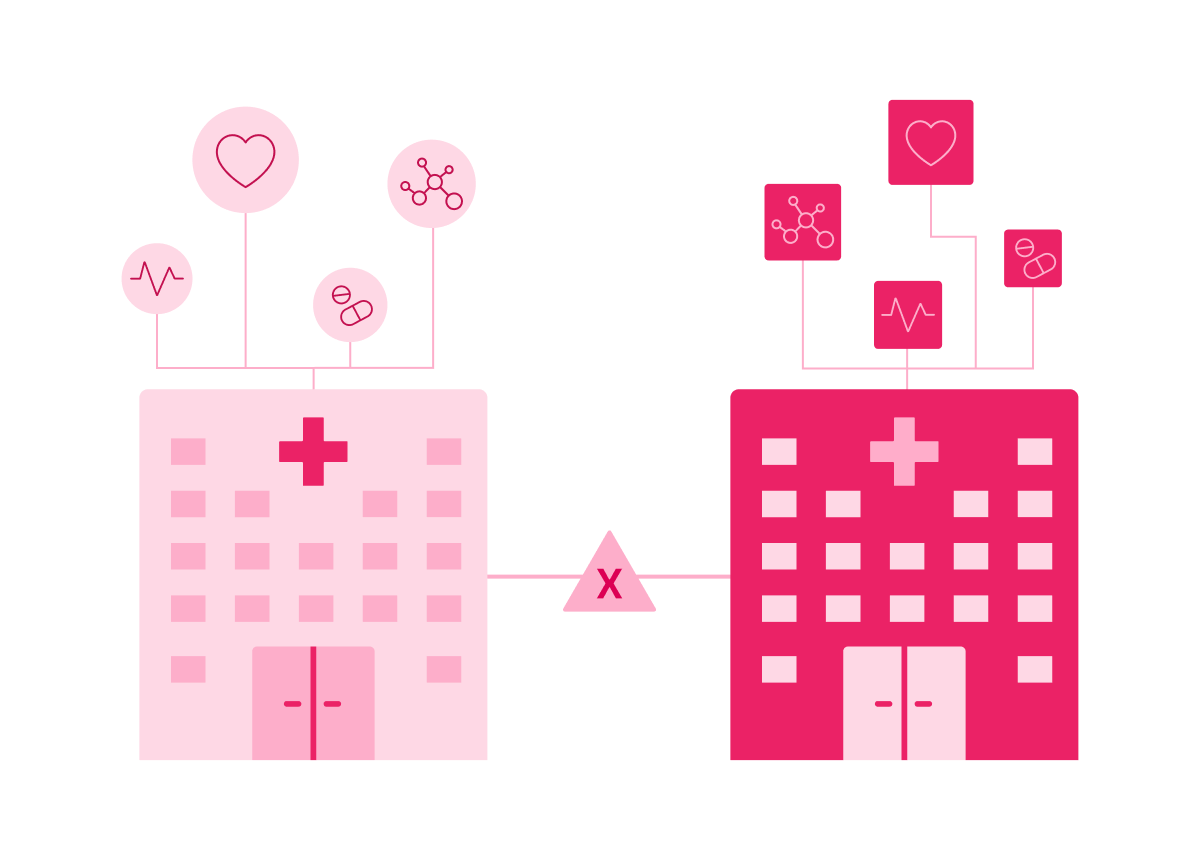
Healthcare data isn’t always standardized. Some hospitals use the latest formats, while others rely on older or even proprietary systems. While Epic is generally the go-to EHR for many hospital systems, healthcare relies on a mix of proprietary software of varying age and agility. This makes it difficult to exchange even basic information like lists of allergies or medication histories. Vendor lock-in adds another layer of complexity, as some software providers restrict data sharing to keep customers tied to their platforms.
For example, a patient’s allergy information might be available in one hospital’s EHR, but when that patient visits another clinic, the data arrives in a format that can’t be read automatically. This leads to delays in care, potential mistakes, and wasted time.
Legal and Privacy Concerns
Privacy regulations like HIPAA and GDPR are essential for protecting patient data, but they can also make things confusing and cause hesitation; organizations are concerned about breaking the rules by accident, so they err on the side of caution and share less information than they could. Some vendors or insurers make it intentionally difficult to exchange data (known as information blocking), due to privacy concerns and fear of competition.
Budget and Resources
An interoperable, modern health system can be very costly to implement. Considerable financial resources and technical ability are necessary, which can raise issues for healthcare organizations and hospitals. Despite high revenue for services, hospitals often struggle to remain profitable. Implementing a considerable and technically-challenging change can be very difficult. However, in the long term, interoperability improves security, enables data-driven decisions, and reduces time-cost for clinicians.
Overcoming These Hurdles and Making Systems Talk
With these hurdles in mind, healthcare providers can adopt a few strategies to help bridge the gaps and create a more connected ecosystem.
Embrace Open Standards
Adopting widely accepted data standards, like FHIR (Fast Healthcare Interoperability Resources), makes it much easier for different systems to share and understand health information. Open standards act as a common language, reducing translation errors and making integration smoother-even between old and new technologies.
Choose Flexible, Cloud-Based Solutions
Cloud-native tools and modular platforms are designed with integration in mind. They make it easier to connect multiple systems, scale as your organization grows, and avoid the risk of vendor lock-in. Cloud solutions also simplify updates and security, helping you stay compliant with evolving regulations.
Prioritize User Experience
Technology should support clinicians, not overwhelm them. Involving staff in the design and rollout of new systems can help ensure that workflows remain efficient and that only the most relevant data reaches the right people. Smart filtering and customizable alerts can help prevent information overload, so important details never get lost in the noise.
Build Privacy and Security into Every Step
Interoperability shouldn’t come at the expense of patient privacy. Implement clear consent processes, use strong encryption, and regularly review access controls to ensure that data is shared safely and only with those who need it. This approach not only builds trust but also makes compliance with HIPAA and GDPR regulation much easier.
The Importance of Interoperability
Interoperability isn’t just a win for healthcare providers and patients, it’s a game-changer for healthtech companies and startups. By adopting interoperability standards and open APIs, startups can accelerate innovation, bringing new solutions to market faster and with less friction. Instead of spending precious development time wrestling with incompatible data formats, teams can focus on building value-added features that truly improve care. Standardized connectivity also means that new technologies can be seamlessly integrated and adopted across a wide range of healthcare organizations, making it easier to scale and reach more users.
For HealthTech companies, interoperable systems open the door to richer data analytics, enabling them to demonstrate the real-world value of their solutions to patients, payers, and providers alike. This access to diverse, real-world data supports every stage of the product lifecycle-from research and development to regulatory compliance, post-market surveillance, and value-based care contracts. Ultimately, interoperability empowers healthtech innovators to create more comprehensive, connected, and impactful solutions that can thrive in today’s rapidly evolving healthcare landscape.