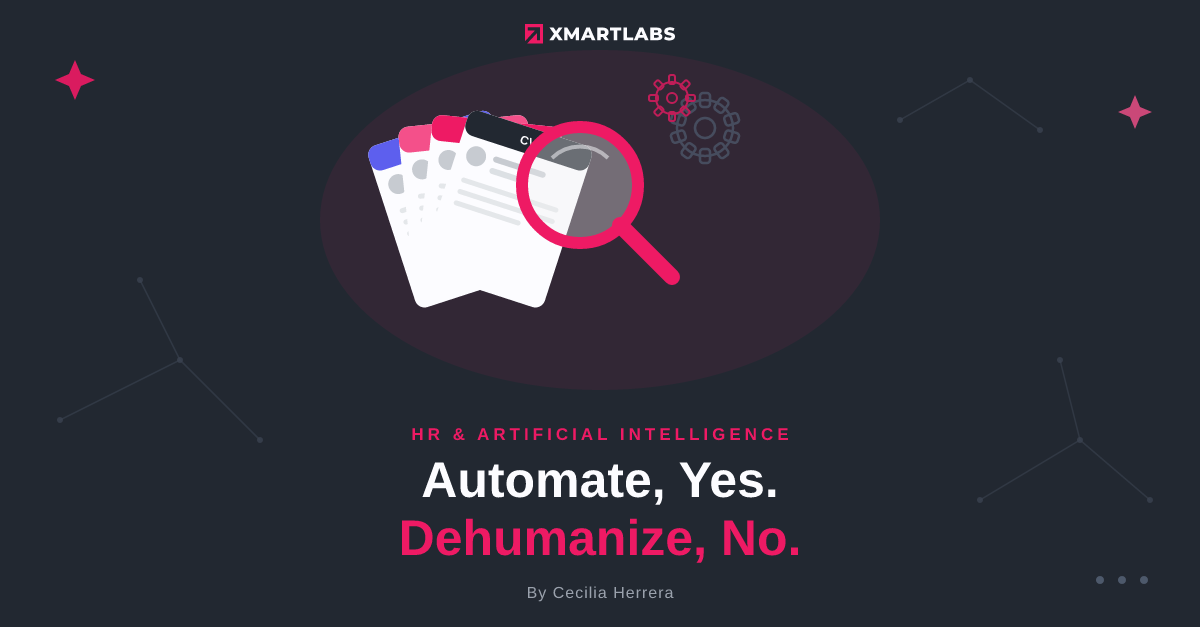
Lately, you've probably noticed that across every media outlet, we hear and see more and more about how artificial intelligence is finding its place, or, in some cases, almost entirely taking over, in recruitment processes. From analyzing resumes, responding to applications, and drafting emails, to reaching a first interview where there's no longer a person on the other side, but an AI. (No, we're not living inside a futuristic movie; this is today's job market reality.)
As someone who has worked in recruitment for more than nine years, I found this unthinkable when I started. And, as happens with almost every field, technology will keep advancing, and we have to adapt to it and make the most of it. But I think the real question isn't whether we should use AI or not, that's a given if we don't want to fall behind and we need to build new skills, the real question is: how far? Which tasks make sense to automate, and which do we still need a person for? Because to me, soft skills are central, and for now, thankfully, those remain uniquely human.
I consider myself a curious, proactive person when it comes to trying new tools. I enjoy automating processes, finding ways to save time, and eliminating repetitive (and sometimes tedious) daily tasks, which feels valuable too. That's why I think the discussion shouldn't be about whether to use AI, but about deciding when it actually adds value.
This might sound like it's from the dinosaur era, but it wasn't that long ago (depending on which generation you belong to). When I started as a recruiter, I called candidates from a landline (yes, almost always to their homes), and all the information lived on paper index cards, handwritten, kept in drawers, and sorted alphabetically. As I mentioned, the way we work has changed enormously in recent years and will surely continue to evolve. As part of today's evolution, it's now possible to reach a candidate in a much more practical, agile, and personal way.
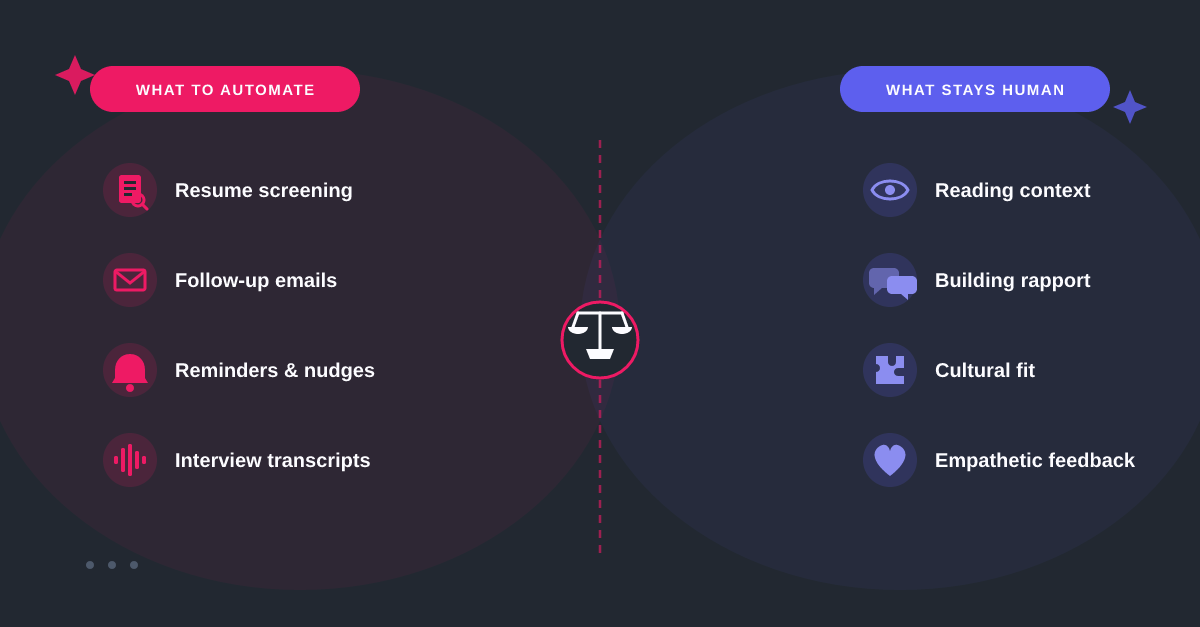
In this article, I'll focus on my area of expertise: HR. Every company is looking to optimize processes and work more efficiently, and I fully agree. In fact, on our team at Xmartlabs, we also push for that kind of improvement. If an AI can draft a follow-up email using information we've already logged and send it with one click, all the better. For example, there are automations I use and value, such as reminders to keep candidates informed and automatic interview transcriptions. We used to spend a large part of our time taking notes; now we can focus much more on listening, asking better questions, and paying attention to the conversation.
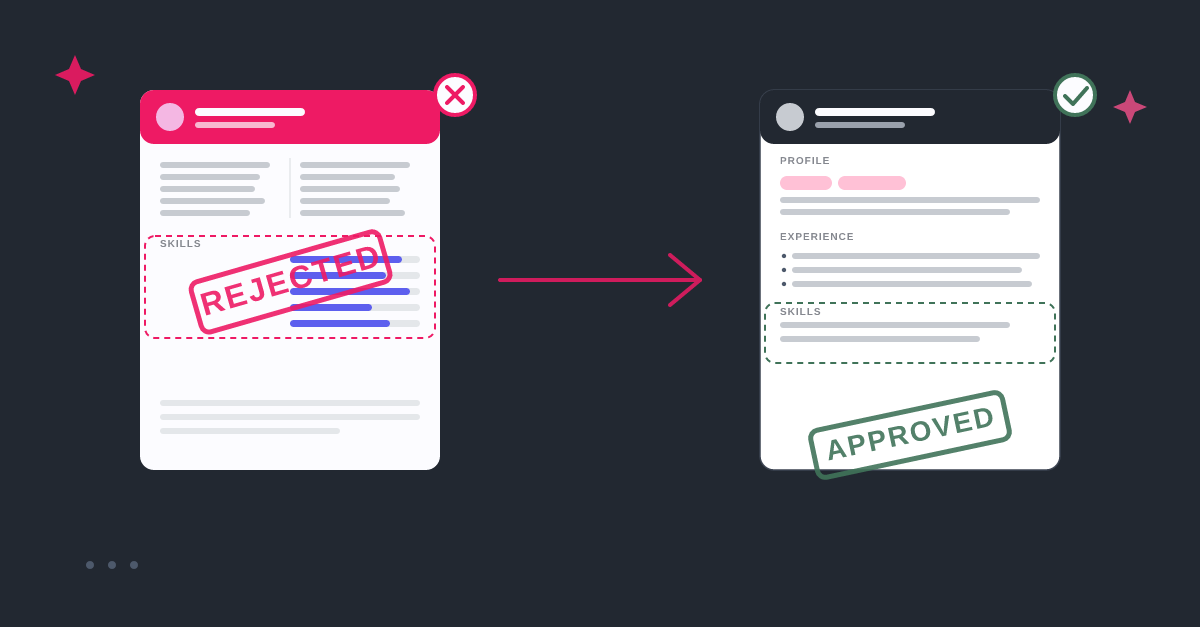
Even resume screening, often seen as the great enemy of job applicants, can be a useful tool when used correctly. It can help prioritize profiles and prevent good candidates from being missed simply because no one got around to reviewing every resume.
Here are a few valuable tips for building a resume that survives this new process:
- Use a simple format. Avoid columns, tables, charts, or text embedded in images, since many ATS platforms can't read them correctly.
- Save it as a PDF and make sure the text is selectable.
- Include keywords from the job description and repeat them naturally in your title, profile, experience, and skills sections.
- Describe your experience. Don't just list your job title; explain what you did, what tools you used, and what you achieved.
- Add a skills section with the technologies, tools, and competencies relevant to the role.
- Tailor your resume to each search. The more aligned it is with the job description, the better your odds of getting past the ATS filter.
But just because something can be automated doesn't mean it should be. I still believe that, at least for now, other parts of the process genuinely need a person behind them
Not just to get a better sense of cultural fit or to catch things that are hard to detect automatically, but because an interview also means interpreting context. Noticing how someone communicates, understanding when they're nervous without judging them, and giving them a few minutes of informal conversation to help them feel more at ease before getting started. Some things never show up on a resume or in a transcript. Things that are only perceptible through the humanity that defines us, empathy, above all.
And it's just as important to think about the candidate's experience.
Let's not forget that during a hiring process, it's not only the company evaluating the candidate. The reverse is also true: candidates are evaluating the company. They want to know how the team works, who's part of it, and what the people they might work alongside every day are like. Often, the interview is their very first impression of the organization. After all, as the name suggests, we're the human resources of that organization. If not us, then who?
Even though I work "on the other side" in recruitment, I'll admit that if I were job hunting today and my first interview were with an AI, I probably wouldn't feel entirely comfortable, speaking personally. That's my opinion; some companies use this approach, and it works very well for them. But for me, an interview is also a chance to get to know the company, ask questions, and start building a relationship with that workplace. Showing culture and seeing that cultural match with the candidate matter too.
So, conclusion? I believe artificial intelligence is here to stay and has huge potential to improve how we work. The challenge is to use it thoughtfully, leaning on it to eliminate repetitive tasks and free up time, without losing the human part of the process.
Even the time we save should go toward improving our work: preparing better for interviews, giving more personalized feedback, understanding each candidate more deeply, and having conversations that actually add value. If AI saves us time, I'd like that time to go back to people. Because at the end of the day, we're still working with them.